Spring is a favorite season among many. From the clear and crisp weather to the beautiful cherry blossom trees. They bloom to life from a year-long period of hibernation.
However, a beloved holiday is introduced to others—Nowruz.
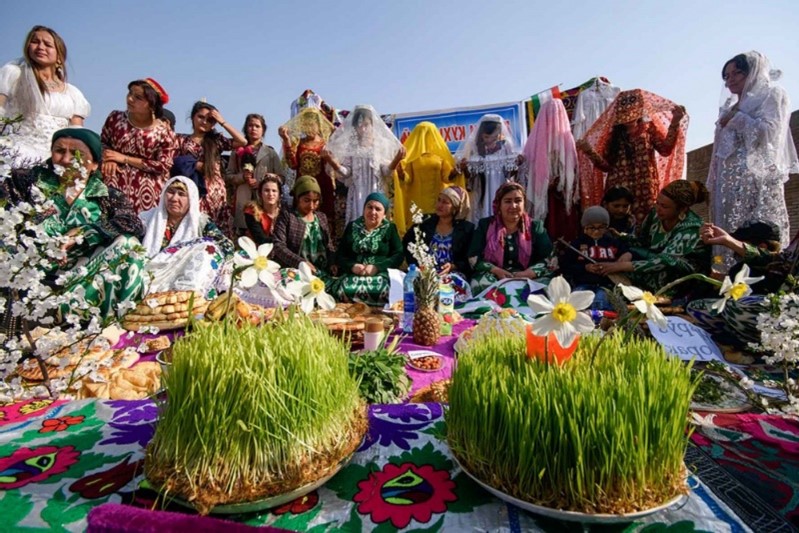
“Nowruz” translates to “new day.” It is known as Persian New Year, a colorful holiday that marks the first day of spring. This year, it falls on March 20th. According to UNESCO, “The return of the spring was seen to have great spiritual significance, symbolizing the triumph of good over evil and joy over sorrow.” Nowruz is celebrated throughout the regions of the Middle East and Central Asia—mostly within the countries that the Silk Road passed through such as Afghanistan, Azerbaijan, India, Iran, Iraq, Kyrgyzstan, Kazakhstan, Pakistan, Tajikistan, Turkey, Turkmenistan and Uzbekistan. Though, it is an unknown holiday despite the large community of Middle Easterners and Central Asians that reside in the U.S.
Shohistahon Uljaeva, Doctorate in History at the National University of Uzbekistan and head of the History of Uzbekistan and Political Sciences Department at Tashkent Chemical and Technological Institution says, “Nowruz is a month-long celebration of extraordinary appreciation of nature that blossoms back to life. This celebration was known to be extraordinary due to it coinciding with daylight savings in which day and night meet. Once Islam entered these areas, which were previously Zoroastrian, many believed that it was not right to celebrate this, thinking it was a devilish holiday. However, their ideas were transformed after seeing others’ appreciation for the holiday.”
For the past 3,000 years now, people from the area have been celebrating this holiday and bringing this celebration to the Western world. Due to accent differences, the name of the holiday is spelled and pronounced differently ranging from Novruz, Nowrouz, Nooruz, Navruz, Nauroz, to Nevruz.
“It’s definitely my favorite holiday and I think it’s the perfect time to ring in a new year,” says Kimia Karaminejad Ranjbar, Iranian-American content creator and PhD student in Economics at UC Santa Cruz and a UCLA graduate with a BA in Economics and a minor in Middle Eastern Studies. “Nowruz takes me back to memories I had as a child in Iran. Now that I’m living in the West, it’s a time when I get to be in tune with my culture. A few days or a week before Nowruz, my family and I go to a Persian supermarket in the San Fernando Valley of Los Angeles. They have pre-made Sabzeh and goldfish to get. We go home and just like Easter, my little sister and I paint eggs, then I set up the Haft Sin with my mom.”
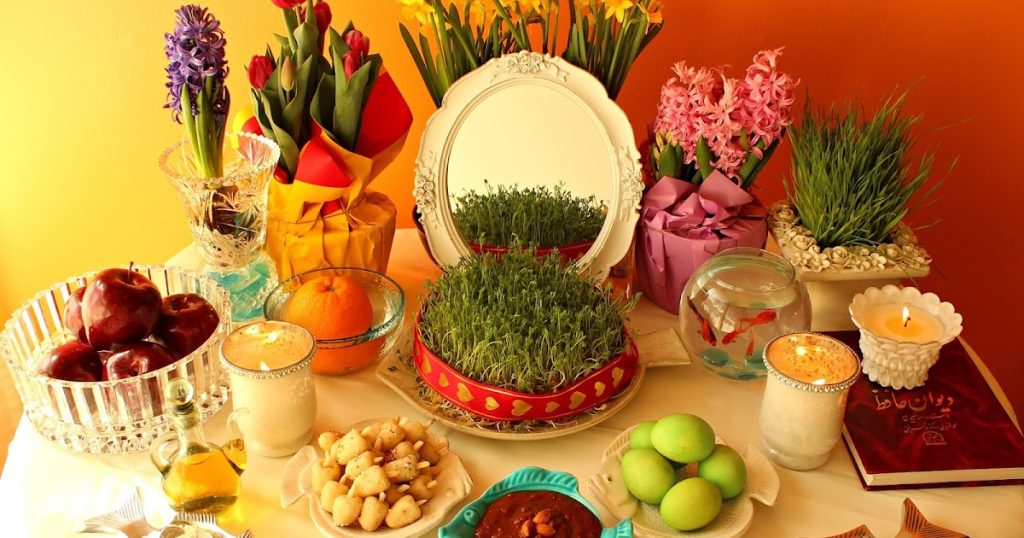
A variety of foods are cooked and set down on a table surrounded by seven items that start with the letter “s” in the Farsi alphabet, otherwise known as a Haft Sin. Although the Haft Sin differs depending on the region, water, candles, sweets and Sabzeh—green sprouts from the sweet Samanak dish (the heart of Nowruz)—are commonly seen.
“[Nowruz] is something that’s celebrated by many Central Asians and I’m truly connected to it. It’s a lovely holiday. It’s a time for you to be able to meet your New Year’s resolutions that you couldn’t commit to two months ago. It’s another chance…,” says Tahmina Aziz, content producer at CBC Podcasts, senior writer and producer at CBC News, and content creator of Tajik-Afghan origin. “I know that East Asians have their own new year, the Lunar New Year, and we have our own. It’s a wonderful holiday where you get to connect with friends and family, eat delicious food and wear new, brightly colored, clothing—which I love; welcoming new blessings and new beginnings, it’s a time for a fresh start. It’s a new year, but the perfect time for it. It’s when spring starts.”
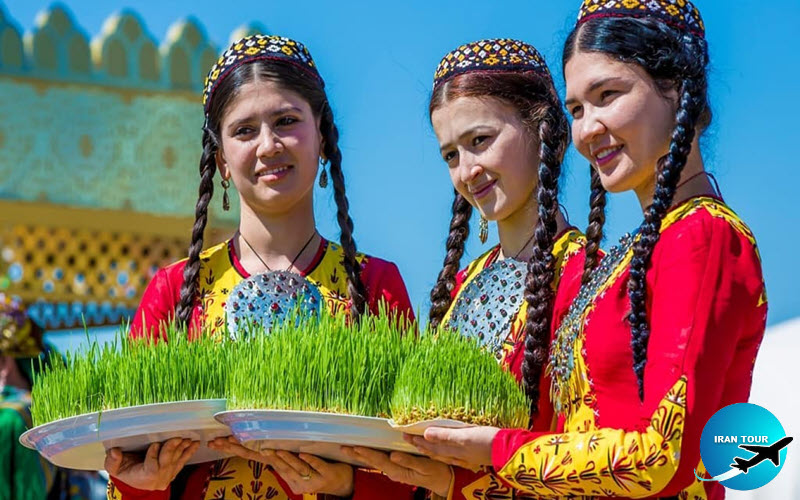
Feelings of pure happiness and kindness are often seen during Nowruz. Frequent symbolism is laced in this holiday such as bonding broken relationships, believing in good deeds, and celebrating with those closest to you as it is believed to bring a fresh start to a beautiful new year.
Generations of people have celebrated this holiday as its roots are rich and authentic, although unknown in Western nations.
